
St. Thérèse of Lisieux
The Little Flower, Doctor of the Church
A Carmelite who died at twenty-four having done nothing the world would notice, and who taught the whole Church that holiness is reached by very small things done with great love.
- Feast
- October 1
- Lived
- 1873–1897
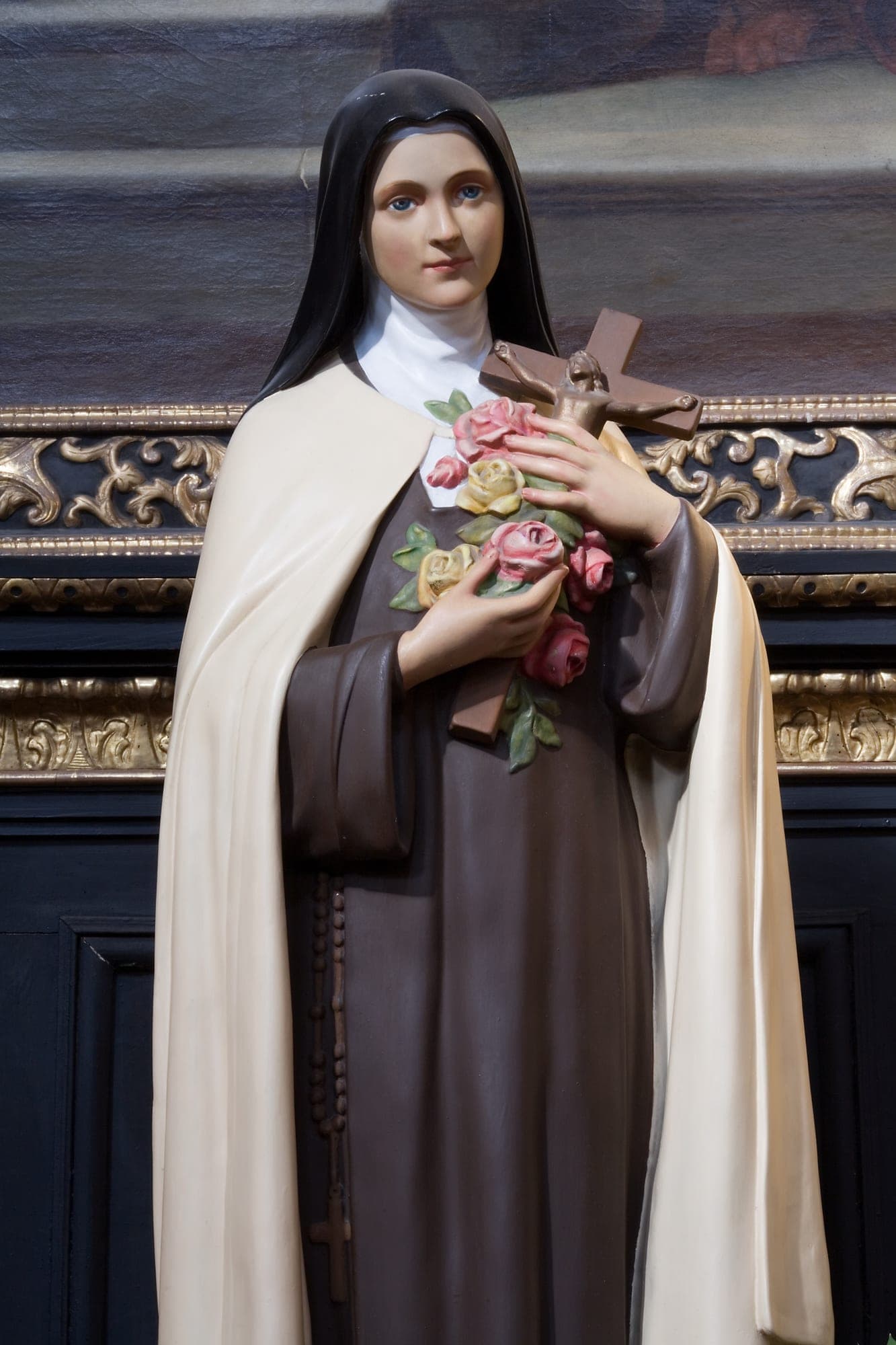
Invoked For
- The missions
- Florists
- France
- The sick
- Those seeking a simple way to God
Her Life
Marie-Françoise-Thérèse Martin was the youngest of nine children at Alençon, of whom four died young. Her mother died when she was four. She was a sensitive, much-petted child, given to tears, and by her own account thoroughly spoiled.
At fourteen, on Christmas night in 1886, something she called her complete conversion took place: the tears stopped, and she found the strength she had been asking for. She wanted Carmel at once, and pursued it with startling determination — she even asked the Pope himself during a pilgrimage to Rome. She entered the Carmel of Lisieux at fifteen.
In the convent she did nothing remarkable. She swept, did laundry, painted a little, bore the coldness of one difficult sister and the irritating habits of another without complaint, and was for long stretches spiritually dry. Her insight was to stop trying to be a great saint by great deeds. She would instead be little, and let herself be carried — offering every small act, every swallowed retort, as an act of love. She called it her Little Way.
She fell ill with tuberculosis and suffered eighteen months of it, along with a darkness of faith she described without flinching. She died at twenty-four, saying, "I am not dying; I am entering into life." Her prioress had ordered her to write her memories, and those pages became Story of a Soul.
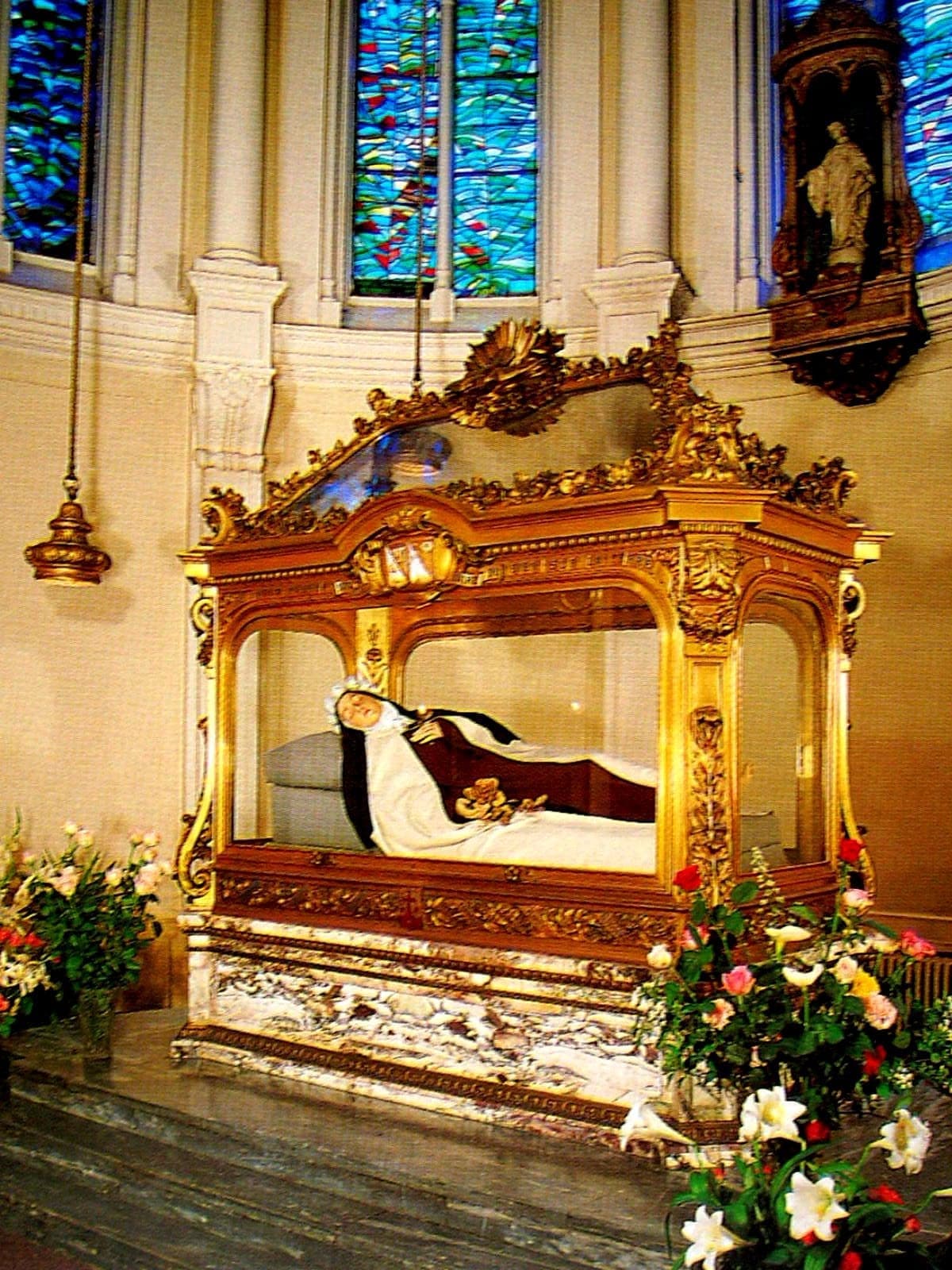
The Path to Sainthood
Story of a Soul was circulated after her death and spread with astonishing speed; within a few years the Carmel was receiving letters from around the world.
She was beatified in 1923 and canonized by Pope Pius XI on 17 May 1925, only twenty-eight years after her death. In 1927 she was named co-patron of the missions with St. Francis Xavier — a cloistered nun who had never left her convent.
In 1997 St. John Paul II declared her a Doctor of the Church, only the third woman to be so named, for the doctrinal depth of her Little Way. Her parents, Louis and Zélie Martin, were canonized together in 2015.
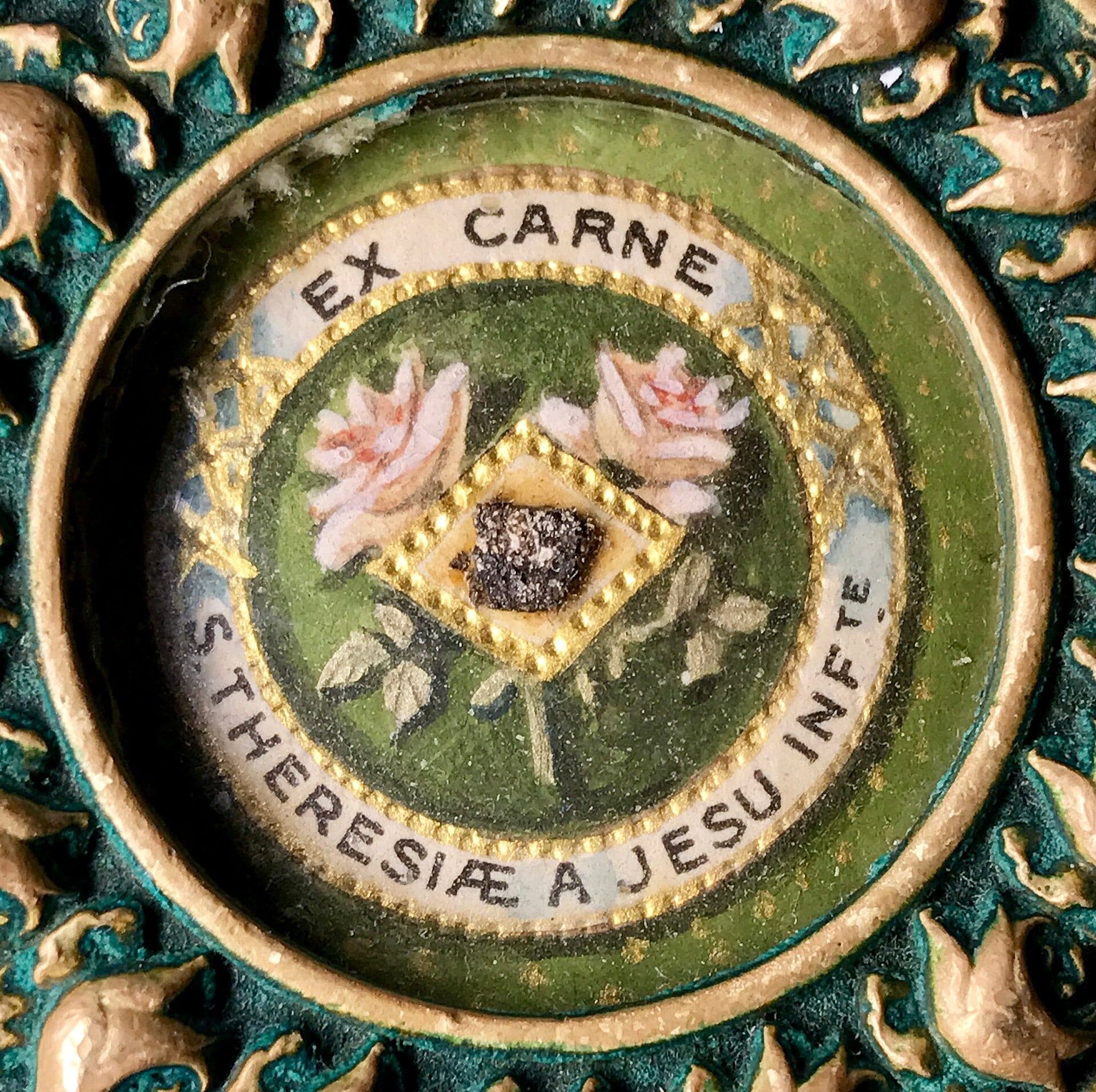
A first-class relic — “ex carne S. Theresiæ a Jesu Infante,” from the flesh of St. Thérèse of the Child Jesus. 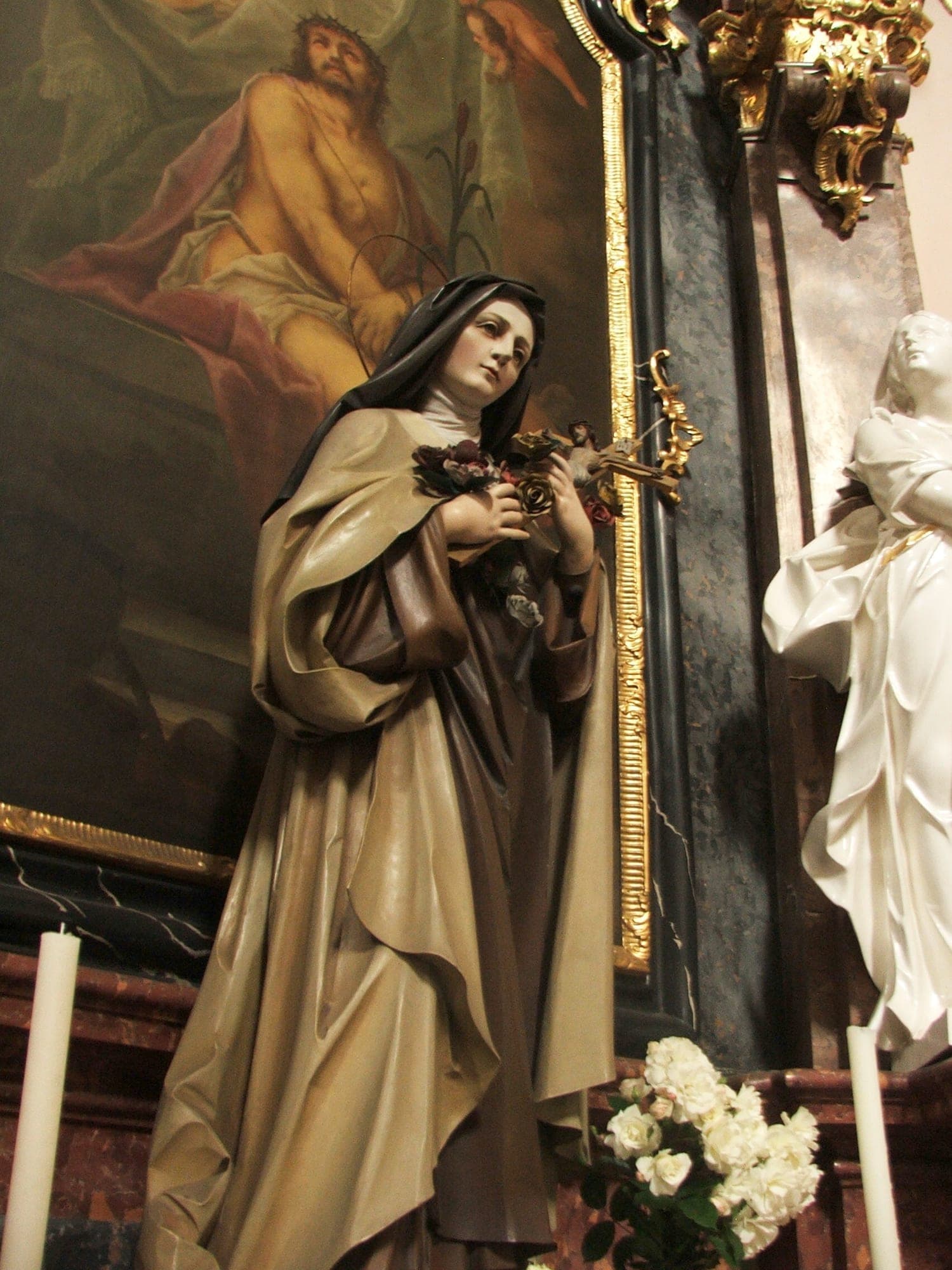
A chapel statue set beneath an Ecce Homo — the Little Flower keeping company with the Passion she offered herself to.
Prayers to St. Thérèse of Lisieux
Tap any prayer to open it large and clear — set for reading aloud. Close it to return here and choose another.