
St. Jude Thaddeus
Patron of Hopeless Causes
The apostle whose name was long forgotten because it was shared with a traitor, now invoked the world over when every other hope has failed.
- Feast
- October 28 (with St. Simon)
- Lived
- First century
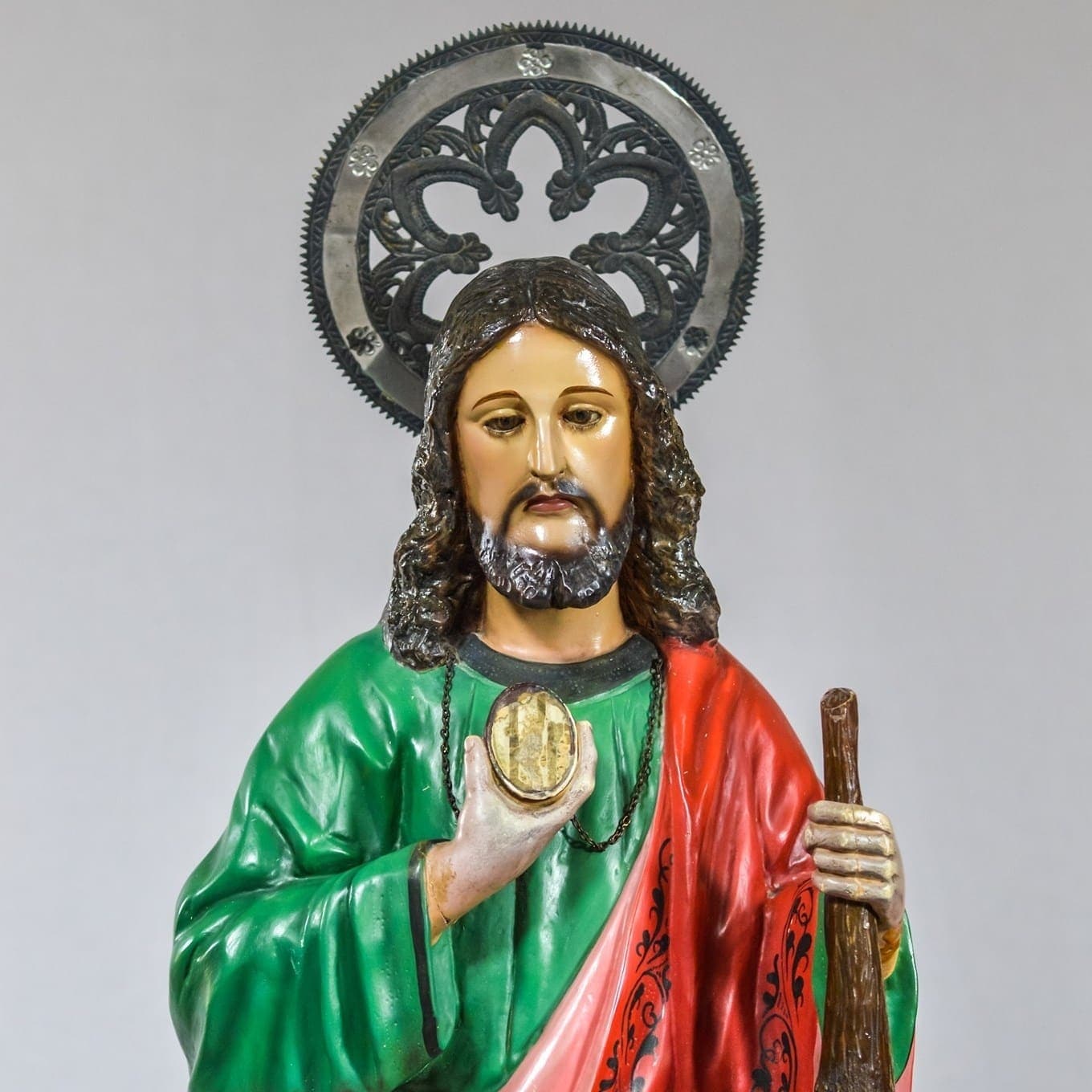
Invoked For
- Hopeless causes
- Desperate situations
- Lost causes
- The sick
- Hospitals
His Life
St. Jude Thaddeus was one of the Twelve. Scripture also names him Judas, son of James, and Thaddaeus — and it is this first name, shared with Judas Iscariot, that caused him to be passed over for centuries. The Gospel of John records his single question at the Last Supper, when he asked the Lord why He would show Himself to the disciples and not to the world.
He is traditionally held to be a kinsman of Jesus, and the author of the brief New Testament letter that bears his name — a letter urging Christians to "contend for the faith which was once delivered unto the saints," and closing with one of the great doxologies of Scripture.
After Pentecost, tradition sends him out to preach in Mesopotamia, Syria, and Persia, for much of that time in the company of St. Simon the Zealot. The two are remembered together, and share a feast day. He is said to have been martyred in Persia, and for that reason he is depicted holding a club or an axe — the instrument of his death.
In sacred art he carries a medallion bearing the face of Christ on his breast. This recalls the ancient story of King Abgar of Edessa, who was healed when Jude brought him an image of the Lord — the root of Jude's long association with healing and with causes given up for lost.
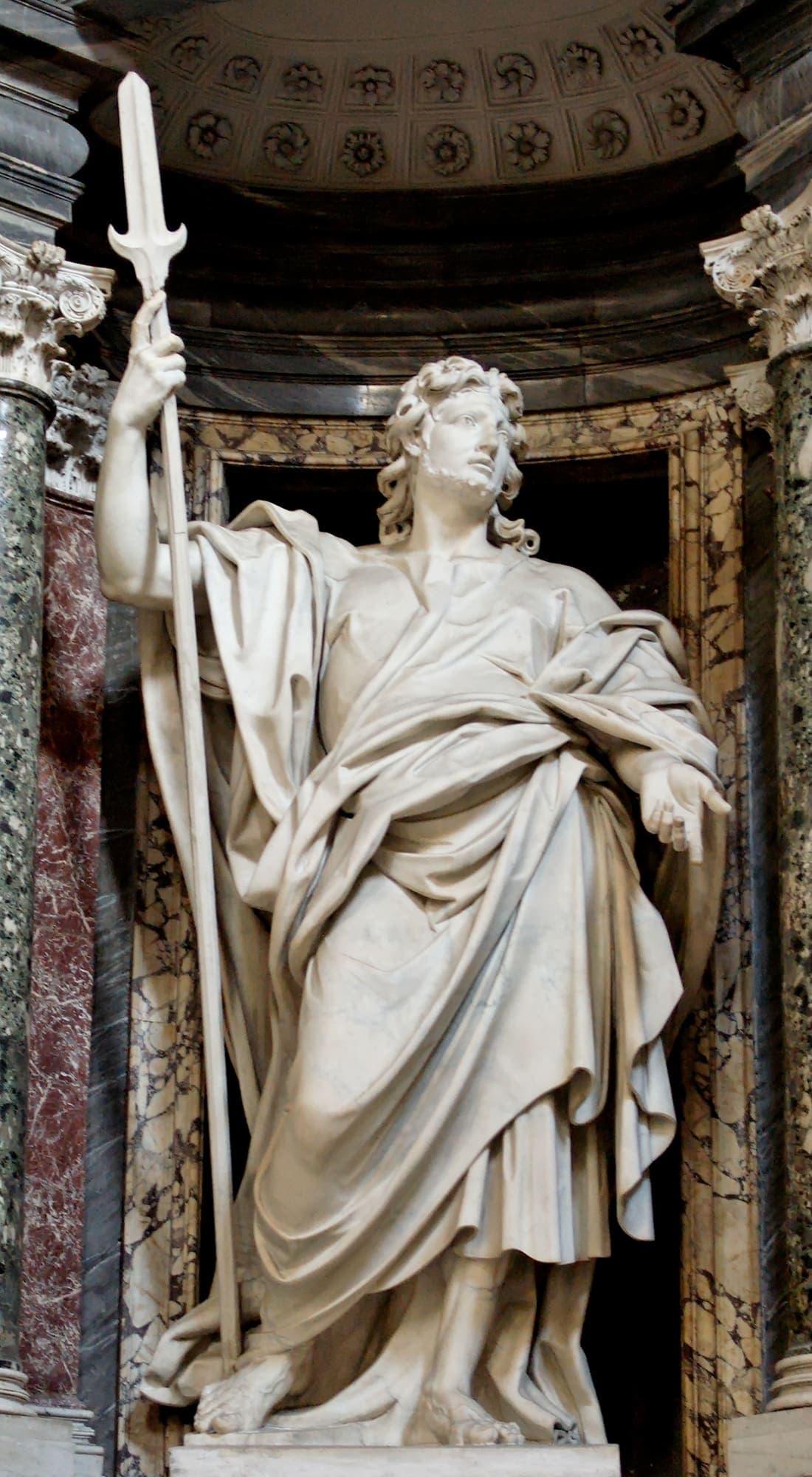
The Path to Sainthood
St. Jude is a pre-congregation saint. He was never canonized by a formal process, because none existed in the early Church; the apostles were venerated as martyrs and witnesses from the very beginning, by the acclamation of the whole Christian people.
His relics are venerated in St. Peter's Basilica in Rome, where they rest with those of St. Simon beneath an altar of the left transept.
Devotion to him as the patron of desperate causes grew slowly and then suddenly. Because his name was so long avoided, it was said that he was eager to help anyone who finally thought to ask him. That reputation spread widely in the twentieth century, and in the years around the Second World War devotion to St. Jude reached remarkable proportions across the United States.
St. Jude Shrine
Baltimore, Maryland
St. Jude Shrine is located in the heart of Baltimore, Maryland, and has been operated and staffed by the Pallottine Fathers and Brothers for over one hundred years. The Archbishop of Baltimore entrusted the Shrine to the Pallottines in 1917.
Regular Novena Services were established around the outset of the Second World War, when devotion to St. Jude reached remarkable proportions. At first the Novena Services attracted only the local parishioners, but in a short time it became a city-wide center where people from all walks of life came to pray to St. Jude.
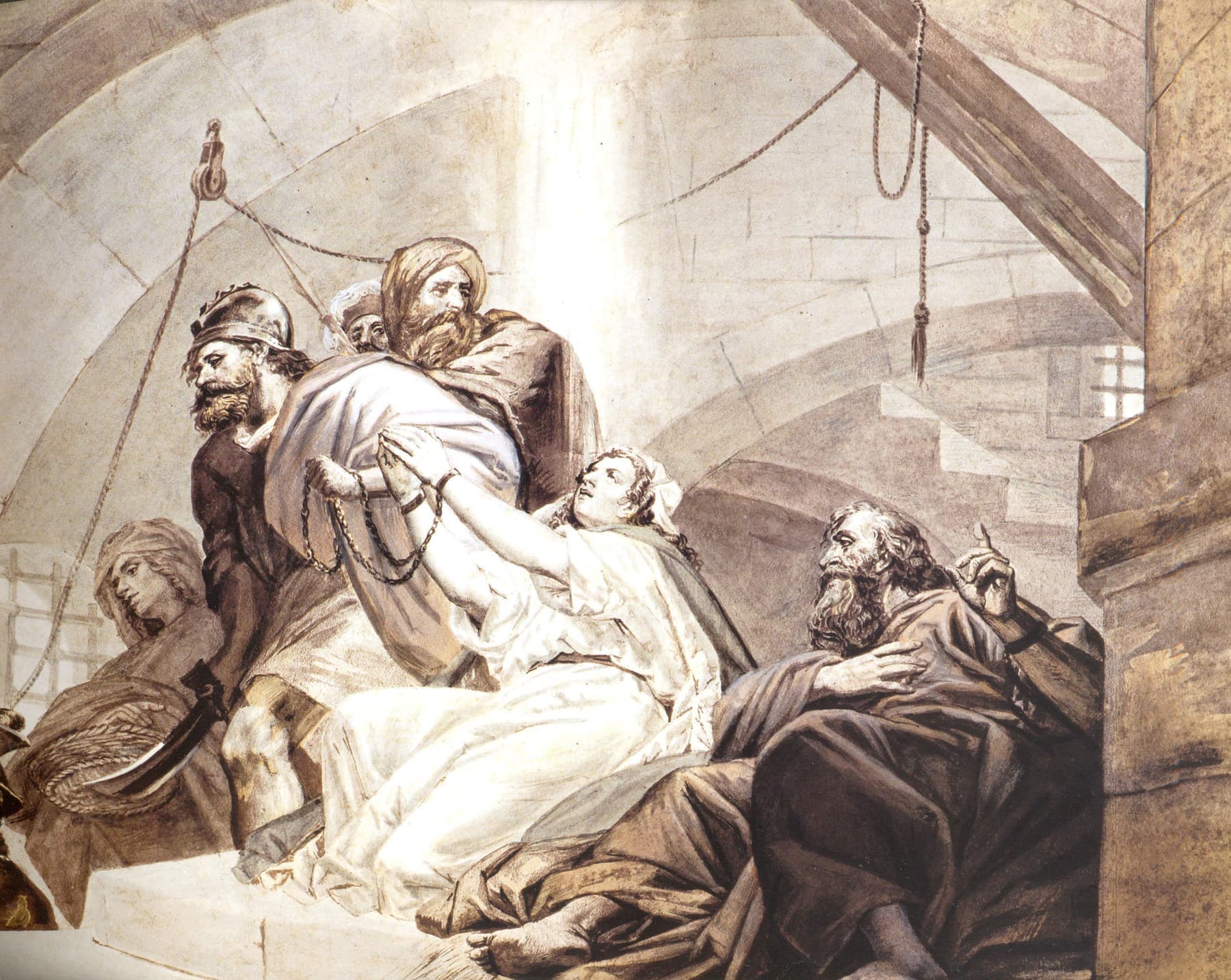
Bound in the prison of King Sanatruk with St. Sandukht, the king's own daughter, who was converted by his preaching and martyred before him. 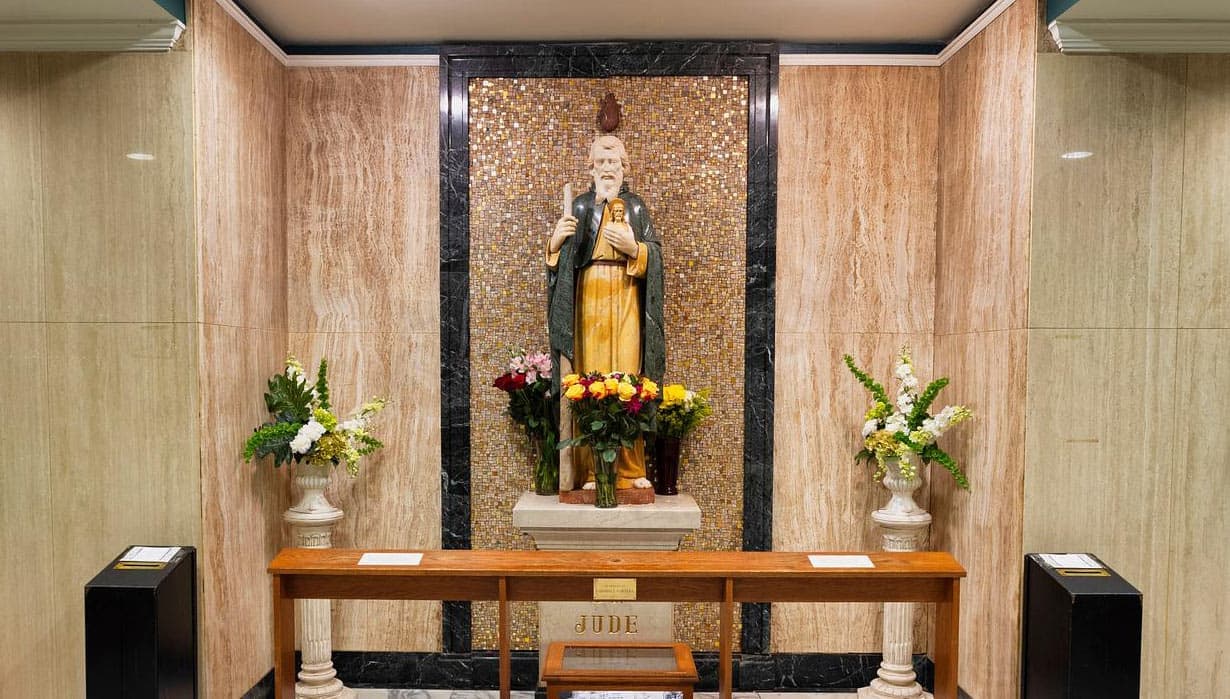
The shrine altar in Baltimore, where the Novena to St. Jude has been prayed since the outset of the Second World War.
Prayers to St. Jude Thaddeus
Tap any prayer to open it large and clear — set for reading aloud. Close it to return here and choose another.